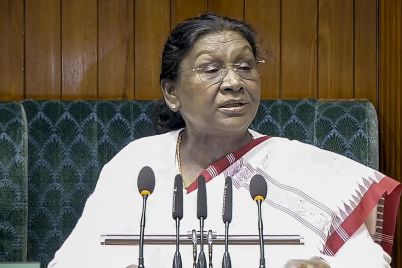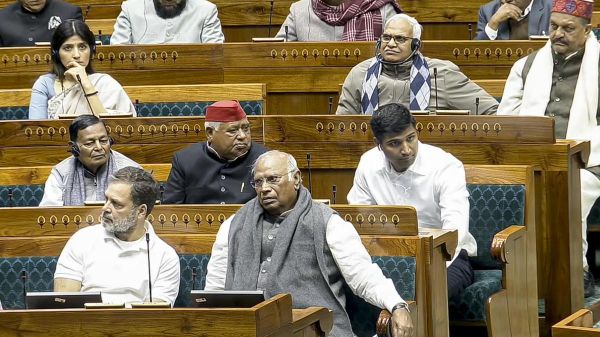
Restoration of MGNREGA law became the central issue during President Droupadi Murmu’s address to the joint sitting of Parliament on January 23, 2026. Opposition parties, led by the Congress, protested against the replacement of the Mahatma Gandhi National Rural Employment Guarantee Act with the VB-G RAM G Act.
Congress leaders said the restoration of MGNREGA law is essential to protect the right to work for rural households. They stressed that MGNREGA remains a rights-based programme that ensures employment security and strengthens grassroots democracy.
The protest followed the President’s reference to the Viksit Bharat – Guarantee for Rozgar and Ajeevika Mission (Gramin) Act, commonly called the VB-G RAM G Act. While treasury benches welcomed the mention with desk-thumping, Opposition members raised slogans demanding a rollback of the new law.
During her address, President Murmu said the VB-G RAM G Act guarantees 125 days of employment. She added that the new framework would curb corruption, reduce leakages, and provide a fresh push to rural development.
Congress general secretary Jairam Ramesh said Opposition parties protested in a dignified manner. He described the repeal of MGNREGA as “bulldozed” and undemocratic. He also said the Opposition would use every constitutional and democratic means to press for restoration.
Opposition leaders argued that MGNREGA empowered panchayats by giving them authority over planning and implementation. They warned that replacing it could weaken local institutions and dilute accountability.
The government, however, defended the new law. It claimed that the VB-G RAM G Act modernises rural employment delivery and improves transparency through tighter monitoring.
Despite these assurances, Opposition parties insist that only the restoration of MGNREGA law can protect rural livelihoods. They maintain that employment guarantees must remain enforceable rights, not policy assurances. The issue is expected to trigger intense debate during the ongoing Budget Session of Parliament.