
India’s housing market in 2026 is undergoing a structural shift, driven less by short-term price cycles and more by sustained public investment in infrastructure. As the Union Budget approaches, it has become clear that capital spending now plays a decisive role in shaping where and how Indians choose to buy homes.
To begin with, infrastructure remains the government’s primary growth lever. Capital expenditure increased from ₹11.11 lakh crore in FY25 to ₹11.21 lakh crore in FY26. Moreover, economists from institutions such as Bank of Baroda and ICRA expect Budget 2026 to raise this figure to ₹12–₹12.5 lakh crore, reflecting annual growth of 7–10%. This steady rise signals policy continuity rather than a temporary push.
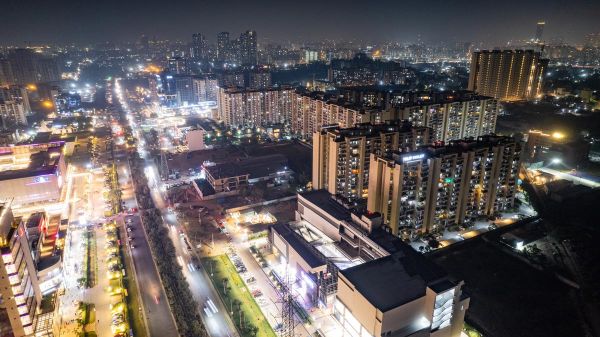
Consequently, large-scale investments in highways, metro rail, expressways, logistics hubs, and urban renewal projects are transforming residential demand patterns. Earlier, buyers focused on traditional city centres. However, improved transit connectivity now reduces commute times and expands the definition of “prime” locations. As a result, peripheral areas with strong infrastructure links are gaining rapid traction.
In addition, transit-oriented development has begun to influence buyer behaviour. Homebuyers increasingly prioritise proximity to metro lines, business corridors, and employment clusters. Social infrastructure—such as schools, hospitals, and retail hubs—also plays a growing role in location decisions. Therefore, housing demand is spreading more evenly across urban regions instead of remaining concentrated in a few pockets.
At the same time, infrastructure projects unlock large land parcels on city edges. Developers, in turn, launch larger and more planned housing projects in these areas. This trend supports better pricing stability, improved amenities, and higher long-term value for buyers. Furthermore, reduced congestion and improved liveability make these locations attractive for both end-users and investors.
Looking ahead, the housing-infrastructure link will only strengthen. As long as capital expenditure stays elevated, residential markets will align closely with public works planning. Ultimately, infrastructure is no longer just supporting real estate growth—it is actively defining India’s housing future.


